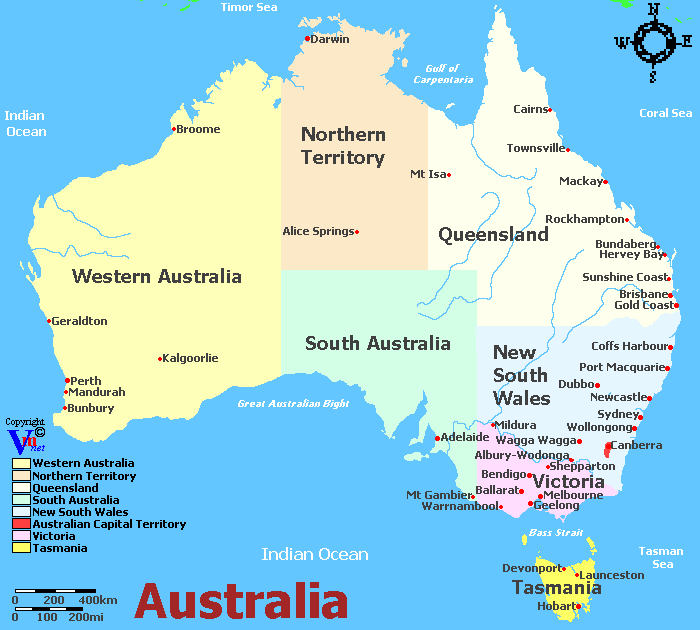
Wine climate: Highly diverse, ranging from Mediterranean and maritime climates
to continental and cool-climate growing regions.
Main wine-growing areas:
South Australia: Barossa Valley, McLaren Vale, Clare Valley, Adelaide Hills,
Eden Valley, Riverland, Langhorne Creek, Coonawarra, Padthaway, and Limestone Coast.
Victoria: Yarra Valley, Mornington Peninsula, Heathcote, Rutherglen, King
Valley, Beechworth, and Gippsland.
New South Wales: Hunter Valley, Orange, Mudgee, Riverina, Cowra, and
Canberra District.
Western Australia: Margaret River, Great Southern, Swan Valley, Pemberton,
and Blackwood Valley.
Tasmania: Tamar Valley, Coal River Valley, Derwent Valley, and Pipers River.
Queensland: Granite Belt and South Burnett.
Vineyard area: Approximately 145,000 hectares (358,000 acres).
Annual wine production: Generally between 1.0 and 1.4 billion litres annually
depending on vintage conditions.
Wine styles: Full-bodied red wines, cool-climate reds, premium white wines,
sparkling wines, dessert wines, fortified wines, and alternative varietal wines.
Wine classification system: Australia primarily uses Geographical Indications
(GI), which define recognized wine regions and production areas.
Major export markets: United Kingdom, United States, China, Canada, New
Zealand, and European markets.
Importance: Australia ranks among the world's largest wine-producing and wine-
exporting countries. Its diverse climates allow production of a wide range of wine styles, from warm-
climate Shiraz to cool-climate Pinot Noir and Sauvignon Blanc.
Wine Classification System
Geographical Indication (GI): Officially recognized wine-growing areas that
identify the origin of grapes and wines.
Zone: Large geographical wine area containing one or more regions.
Region: Defined wine-producing area with distinct characteristics.
Subregion: Smaller area within a region possessing unique growing conditions.